Friday, October 19, 2012

spaces are spaces wherever we are

my thoughts and prayers go out to the family and friends of Amanda and all others whose lives are affected by bullying

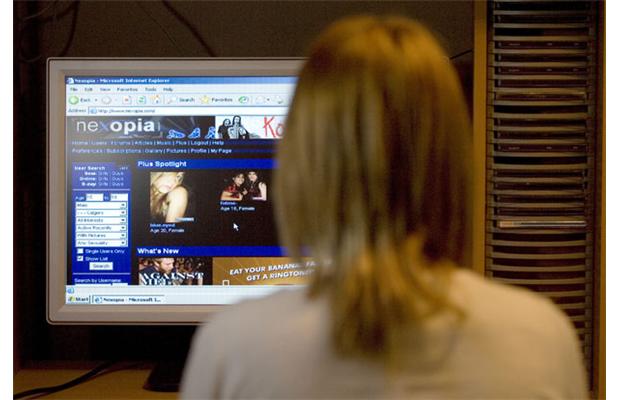
the tragic end for Amanda Todd has reignited a look at the roles that online media – and social media in particular – play in personal interactions. while the social web has offered the users of all ages opportunities for finding communities of like-minded people, offering and receiving social support, and exploring identity we also know that there can be negative outcomes. the online world is another space (or set of spaces) and like any other type of space it can be used in a wide variety of ways. youth social interactions are not much different online as they are in the physical world. there is entertainment, play, thoughtfulness, and genuine friendship, but there is also subversion, anger, insecurity, and spitefulness. the dominant social narrative is that the latter types of behaviours are more prevalent, yet the evidence from research demonstrates consistently that these darker experiences are not the general case. sadly, it appears that when things go wrong they can go very wrong.

the reality is that there is a decline in the types of spaces that young people have available to them to try things out. malls, parks, street corners, etc. have become regulated spaces where they are scrutinized and asked to disband. increasingly urban cities are ‘youth unfriendly’ and even at the college and university levels our youth are shuttled from place to place, or tethered by their mobile phones. the online space becomes a place of…freedom, and while it is true that with freedom comes responsibility this is something that must be learned, not just in the classroom, or in the home via lectures but by living it - making mistakes and making corrections.

history is likely to look back at our millennial generation (currently 18-33 years old) as the group that had to learn how to navigate the digital world with little guidance. while parents remain the gatekeepers in the home, Pew Internet and American Life data from 2011 found that 41% of parents had no conversations or controls in place for online use in the home – and this is self-reported data so it is likely that this number is higher (see Pew Internet). we do not have research data in Canada to compare this to but we can guess that it is similar from anecdotal information and smaller case studies. as we as a broader society struggle to figure out the social norms and rules for social interaction via new media, experts in child and youth developments suggest that there are early steps that we can take in the home.

From these experts come the following suggestions:
1. try to find your what information about your children is online (search for their names/nicknames on a browser).
2. go on online trips with your millennial (or younger) children on topics of common interest. working together you can model appropriate online information practices.
3. talk to your teens about things that are bothering them – on and offline. Encourage them to talk to their peers and to speak out if there is something that they have seen or experienced that makes them uncomfortable.
4. seek professional help if you feel overwhelmed or don’t know how to start the conversation about safety online. talk to the councilors in your local school or to your family doctor for resources in your area.

l8r 4 now, R.

See the following helpful links for more information
http://www.netsmartz.org/safety/safetytips
http://www.schoolfamily.com/school-family-articles/article/807-internet-safety-tips-for-parents
http://www.cyberbullying.ca/


image source: calgaryherald.com

Tuesday, January 10, 2012

mobile manners!

frustrated by the person in the LIBRARY talking at full-tilt on their mobile phone? what about at family gatherings where you are trying to enjoy (yes i said enjoy) the company of your distant loved ones...except for you-know-who who is unable to tear himself and his thumbs away from his texting? and, ehem, are you sometimes that guy?

today i joined matt galloway on toronto's metro morning show
http://www.cbc.ca/metromorning/episodes/2012/01/10/mobile-manners/ and wei chen of ontario morning http://www.cbc.ca/ontariomorning/episodes/2012/01/10/mobile-manners/to discuss just that.

i highlighted research done here in toronto that shows an embeddedness of mobile technologies in the way that we communicate. it is not that these devices are causing us to walk into street poles while texting, but it is an increasing desire to be constantly connected that these devices are satisfying.

so what about manners and etiquette regarding mobile phones? rich ling and i wrote a paper about it that you can find on my website under publications. in it we discuss that what we do versus what we ought to to in a given social situation is considered relative to social norms. in the decision moment we rapidly compare our behavior to what others are doing in similar situations. the problem with mobile phone use is that the social norms are still emerging and often what we ought to do in a given moment depends on our interpretation of who is around and the value that we place on answering versus not answering.
http://www.blogger.com/img/blank.gif
in fact, it is a matter of prioritization - does the co-present person take precedent or does the person on the other end of that connection? what if the value is the same?

in addition, we have expectations around response that muddy the waters. if your normal response time to your loved one is under 1 minute on a text message, if you take 10 minutes to respond this time will they worry? and the same thing goes for the workplace - in many places there an expectation to respond right away to a request for information, so what does it mean for you if you choose to wait?

if you are intrigued by these questions, read the paper (Ling & McEwen, 2010). http://individual.utoronto.ca/rmcewen/publications.html

l8r,
R

Sunday, August 14, 2011

Deals + Friends = Social buying

social buying is when purchasing and social networks come together. companies like LivingSocial, BuyWithMe, and Groupon are tapping in to our deal seeking and social networks behaviors by combining them. i discussed this with Mary Ito from the CBC Radio program Fresh Air on Aug 14th - you can hear the audio here http://www.cbc.ca/video/news/audioplayer.html?clipid=2089722318 - it runs for 9:57.

of interest is the combination of influencers used in these types of services: a) the coupon - a well established off-line technique to encourage purchasing by offering a deal to those that collect it; b) the time limit - eBay, Priceline.com, and others have capitalized on the ticking clock countdown tactic so that the user feels the need to act quickly to get in on the action; this adds a gaming quality to the coupon; and c) the social network - step right up but bring a friend (and the more the merrier) to get the deal since a minimum number of people have to agree to take the coupon or the deal goes away.

this triad (coupon + time limit + social network) is a killer combination for many people and the kinds of deals reflect the social nature of the service - restaurants, bars, and events that lend themselves most naturally to group participation are top of the lists.

is this a fad? no chance - it's here to stay. social buying appeals to information and social practices that are already well entrenched in modern living. Reijo Savolainen describes information practices as those involving information seeking, use and sharing. Social buying has all the hallmarks of an information practice - deals are sought, used, and shared. i would add that social media services like Groupon use new media technologies as platforms through which information practices are accelerated and can lead to practices on a global scale. as new technologies emerge some of these practices take on a new forms and have the potential to accelerate across networks.

chat l8r.

Wednesday, December 15, 2010

Tagore on death: In rememberance of Wayne Soon, rest in peace

It is with a heavy heart but a hopeful spirit that I share a poem by one of my favorite poets - the great Rabindranath Tagore (1861-1941). 'Farewell' is one of 103-157 poems/songs in Tagore's Gitanjali or `song offerings'.

I dedicate this post to Wayne Soon. Wayne was a student in my INF 1003 class at the University of Toronto this fall. He is remembered and celebrated by his colleagues and teachers as a top scholar. May he rest in peace.

Farewell

I have got my leave. Bid me farewell, my brothers!
I bow to you all and take my departure.
Here I give back the keys of my door
---and I give up all claims to my house.
I only ask for last kind words from you.
We were neighbors for long,
but I received more than I could give.
Now the day has dawned
and the lamp that lit my dark corner is out.
A summons has come and I am ready for my journey.

Wednesday, August 25, 2010

relationships in personal communities

personal community research invokes a certain understanding of ‘community’. instead of regarding communities as bound up with organized institutions such as family, neighborhood, work or voluntary organizations, personal community research treats communities as the network of personal relationships that a given individual belongs to and/or manages. because personal networks on social networking software such as facebook (or of professionally gregarious folks such as politicians or salespeople) can include thousands of weak ties, we make a distinction between ‘personal networks’ and personal communities the latter of which focuses on the relationships that we have with those in our everyday networks, largely consisting of the family and friends that we consider meaningful to us.

when we think of relationships in the everyday sense we initially think about the people in our personal communities that are close to us. those people with whom we are intimate with and share deep affection, those that in the vernacular sense we are in a relationship with, like our boyfriends, spouses, and partners. we recall persons with whom we have a longer history and memory of, like our relations including parents, siblings, and in many societies extended family who may not be blood relatives but who we still call ‘aunt’ or ‘uncle’ as markers of the role that they play in our family–life. and we may think of some people who have shared specific and significant experiences with us so that we are associated with each other in relation to something, like sorority sisters, hockey team members, or work colleagues.

relationships have always been a manner of expressing to ourselves and to others how we are connected to each other in our personal communities. they are terribly important to us – both in terms of the emotional, financial, and informational resources that are made available to us from the interactions they represent, and in terms of what they portray to others about ourselves. we can all recall an instance of needing to clarify very quickly to someone that a certain lithe, twenty-something is only my niece, or that indeed the attentive lunch-mate is the latest love interest. the people we are connected to visually say a lot about us, or at least they imply a lot about who we may actually be. this is why the paparazzi go to enormous lengths to get that tell-tale photo, and why most persons of elevated status have well paid image consultants coordinating who they may be see with in different circumstances. relationships define who we are as individuals.


of course, like most societal forms relationships are subject to social rules and structures. for example, in contemporary society it is frowned upon and often illegal to marry a first cousin (although in the regal and royal past this was not the case), monogamy is the western explicit ideal, and as children we learn that it is not polite to tell-tales on our friends. legal, moral, and ethical institutions structure how we behave within relationships. in many instances these structures serve to protect the interests of those in relationships where there is an unequal power distribution. teachers should not get too deeply involved in relationships with students, and presidents should maintain some relational distance from interns.

Monday, April 12, 2010

touch technology and autism

in the world of adaptive technologies, "curb cuts" refer to things that are originally designed for persons with special requirements that gain great utility for other persons. curb cuts literally are the slopes on the corners of most newly constructed sidewalks that allow wheelchairs to more easily transition from the sidewalk to the street, and up to the sidewalk again. but anyone who has dragged an uncompromising suitcase to a supposedly nearby subway knows that they are life - if not back & shoulder - savers. parents pushing surprising sweetly sleeping babes also love them, as do rollerbladers, joggers, and folks who's dexterity is not what it used to be.

in my research i often find myself examining the ways that something designed for a particular purpose, opens doors for unintended others. for example, SMS was a network technology intended for system traffic, boring stuff for the engineers and routers to send when there was a bit of spare capacity. then japanese teenagers began to make a language out of the numbers sent on pagers - turning numeric phonetics into alpha codes. this became the stepping stone toward the commercialization of text messages over SMS networks, and the rest is history (for more on this google search Mimi Ito).

in my current work i am looking at the use of iPod Touch devices and the 'app for that' mentality that has swept the globe. in particular touch technologies have great utility for children with communication disorders. at Beverley School in toronto a team of hard-working and visionary teachers led by a risk-taking principal are working with me to gather data on the extent to which these entertainment devices become social tools for children without a voice. the results are very promising and forthcoming. yesterday's Globe and Mail in canada ran a piece about the study - see http://bit.ly/9zmSTe for more, and watch this blog for more in Aug when phase 1 of the study is completed.

able & disabled r only labels.

Monday, March 22, 2010

a few views about social media in academia


this month (march 16, 2010) i was interviewed by Karla Wobito of the university of toronto Bulletin magazine about social media. below is the full interview from which the Bulletin piece was taken.

Q: What type of social media do you use on a regular basis (personal use)? (ex. Twitter, blogs, Facebook, MySpace, etc.)

rm: IM, Second Life, Twitter, Facebook, blog, SMS, World of Warcraft, and Linked In.

Q: And, What ones do you use in relation to your role as a staff member at UofT? How do you use it?

rm: Blog and Linked In for academic idea sharing and networking. I blog ideas that I raise in my classes and about academic readings. I use Linked In to connect students to my former colleagues in management consulting for job opportunities. I also interact with information professionals in Second Life fairly often. The American Library Association, Alliance Library System and several Information Schools like ours have academic events, talks and social events in this extended reality environment. I currently teach a course on avatar identity and community using Second Life.

Q: Do you think more faculty and staff should be using blogs to help teach students or to keep them updated on the latest news in their departments? If so, what do you think is any easy way to get started?

rm: I do not think that social media is for everyone. I believe for some faculty social media will be viewed as useful and for others it will be viewed as a burden. For those comfortable with managing these interfaces with broad and imagined audiences, a good start may be to blog about class readings/issues arising from discussions at conferences, etc as appropriate. For persons comfortable with maintaining a journal, blogs may come easier. For those who like reporting events as they happen (e.g. journalist style) Twitter may be the better start and they might try joining in the discussions in a backchannel at a conference presentation. For others who have limited time or confidence in social media, a Linked In presence may be a sufficient start.

Q: Do you think that the use of social media can ever have any negative effects?

rm: As is the case with using almost any media, there are opportunities to using social media and concequences to over reliance and inexperience. While I have many examples of positive experiences, since you have asked about negative effects I will address this. 'Negative effects' suggests that the social medium had done or caused something rather unfortunate to happen to the user. I do not think of our interrelationships with media in this way. When we use devices or software (media) in our relationships with other people, these media become inextricable components of the interactions, and we are affected by media as much as we affect media.
For example, if I regularly use text messaging (SMS) to communicate with a colleague, part of the way that I begin to think of this person is tied to the immediacy of response, the tone, and the short bursts of rapid information exchange that are conditioned by the medium itself. My colleague and I may create a system of using a missed call followed by a 20 message exchange that uses the mobile phone in ways unintended by the service provider. And I may out of habit first use text to connect with this colleague even when a voice call may be more effective. These mediated interaction rituals can hamper efficient information exchange or even, as I found in recent research, hamper the development of new relationships in the short term. But such concequences must be viewed as one aspect of a complex set of interactions in contemporary societies.
Do people spend too much time using social media? Do they make faux pas and send rather personal missives into the ether? Do we use our thumbs more than our voices? Answers to these questions should consider both the individual user and the social, political and cultural context from which they are a product. What is clear is that community and our propensity to remain connected to others is undiminished. These are some of the things that we study at the iSchool.


Q: For you personally, what are all of the benefits of using social media?

rm: I enjoy having multiple ways of expressing my views, my interests and my personality. I know that one size does not fit all and having options to communicate with specific individuals and groups works for me. I also research youth so participating in the spaces that they inhabit (on and offline) deepens my understanding of their interactions and gives me credibility with younger people.

end